-
-
-
Jakarta, Indonesia
Understanding Stunted Children: Chronic Growth Failure, Early-Life Risks, and Why It Matters Beyond Height
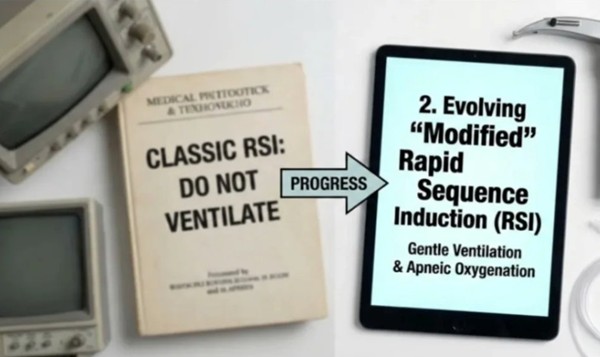
The Evolution of RSI: Why "No Ventilation" is No Longer the Rule
-
 Post By
 -
Published
March 14, 2026
The Classic Dogma: Why "Do Not Ventilate" Became Law
For decades, the gold standard in emergency airway management held a rule so absolute it was printed in textbooks and drilled into generations of emergency physicians, anesthesiologists, and intensivists without qualification: during Rapid Sequence Induction, you do not ventilate the patient. The rationale behind this doctrine was physiologically sound in its original context — RSI was designed for patients at high risk of pulmonary aspiration, particularly those with a full stomach, and mask ventilation between drug administration and laryngoscopy was believed to insufflate gas into the stomach, raising intragastric pressure and increasing the risk of regurgitation of gastric contents into an unprotected airway. The sequential combination of a rapidly acting induction agent and a depolarizing neuromuscular blocking agent — classically succinylcholine — was intended to produce unconsciousness and complete paralysis within 60 seconds, at which point the clinician would intubate without ever having delivered a breath. This rigid no-ventilation interval was not a suggestion; it was the standard of care, institutionally reinforced and rarely questioned for nearly half a century.
The Turning Point: When Evidence Challenged the Rule
The shift in practice did not happen overnight, nor was it born from theoretical debate alone. It was driven by accumulating evidence from emergency departments and critical care units worldwide revealing an uncomfortable truth: patients undergoing classic RSI — particularly those who were already hypoxic from respiratory failure, sepsis, or trauma — were experiencing critical desaturation events during the apneic interval that, in some cases, were causing severe harm or death. Critically ill patients have markedly reduced oxygen reserves compared to elective surgical patients, and the 60 to 90 seconds of apnea inherent in the classic technique was, for many of them, dangerously long. Simultaneously, the evidence base supporting the aspiration risk of gentle bag-mask ventilation proved far weaker than historical doctrine had implied. Studies demonstrated that properly applied low-pressure ventilation with attention to cricoid pressure produced minimal gastric insufflation. The medical community was forced to confront a difficult reality: the rule designed to prevent one catastrophic complication was, in certain high-risk populations, precipitating another. Progress demanded a more nuanced, patient-centered approach.
The Modern Approach: Gentle Ventilation and Apneic Oxygenation
The Modified RSI that has emerged from this evidence revolution is not an abandonment of safety — it is a recalibration of where the risk actually lies for each individual patient. The two cornerstones of this modern approach are gentle ventilation and apneic oxygenation, and together they address the most dangerous phase of the intubation sequence with a specificity that the blunt rule of the past could never provide. Gentle ventilation — defined as low-pressure, low-tidal-volume bag-mask breaths delivered after induction and paralysis — serves to pre-oxygenate and maintain oxygen saturation during a prolonged apneic phase, particularly in patients who desaturate rapidly. The emphasis on "gentle" is deliberate: low inflation pressures below 20 cmH₂O minimize the risk of gastric insufflation that the classic doctrine sought to avoid, preserving the safety rationale while eliminating the physiological penalty of uncorrected hypoxia. Apneic oxygenation, the second pillar, exploits a well-established physiological phenomenon: even in an apneic, paralyzed patient, passive high-flow oxygen delivered via nasal cannula at 15 liters per minute continues to diffuse down a concentration gradient from the nasopharynx into the alveoli through a process called diffusion oxygenation. Clinical trials, including landmark studies from emergency departments managing critically ill patients, have demonstrated that apneic oxygenation can extend the safe apneic period by several minutes, dramatically reducing the incidence of critical desaturation events. For the modern emergency physician, Modified RSI is not a compromise — it is the evidence-based synthesis of decades of clinical learning.

Urinary Tract Infection Updates: Current Clinical and Public Health Developments
Urinary tract infection remains one of the most common bacterial infections globally, with current updates focusing on antimicrobial resistance, diagnostic stewardship, recurrent infection management, catheter-associated prevention, and emerging non-antibiotic strategies. This article reviews recent developments relevant to clinicians, researchers, and public health professionals.
Top 5 Vegetables That May Enhance Immune Function: An Evidence-Based Nutritional Overview
Dietary patterns rich in vegetables are consistently associated with improved health outcomes, including support of normal immune function. This article reviews five vegetables—broccoli, spinach, garlic, carrots, and red bell peppers—that may contribute to immune resilience through their content of vitamins, minerals, antioxidants, and bioactive phytochemicals.


Understanding Stunted Children: Chronic Growth Failure, Early-Life Risks, and Why It Matters Beyond Height
Stunting in children refers to impaired linear growth resulting from chronic undernutrition, repeated infection, and unfavorable early-life conditions. More than a matter of short stature, stunting reflects a broader process of biological and developmental disadvantage that can affect cognitive outcomes, school performance, and long-term health.
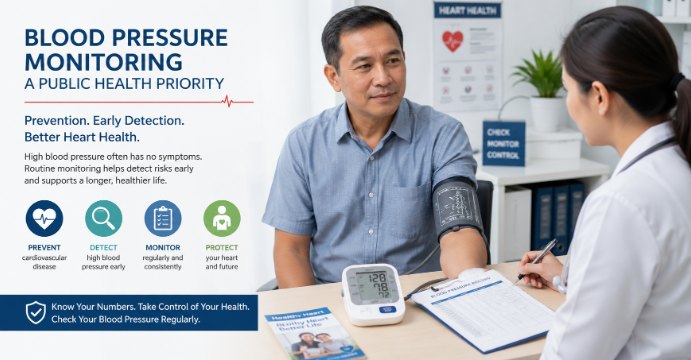
Blood Pressure Monitoring as a Public Health Priority: Strengthening Early Detection and Long-Term Cardiovascular Prevention
Blood pressure monitoring remains one of the most practical and impactful tools in public health for identifying hypertension early, guiding treatment decisions, and reducing long-term cardiovascular risk. Wider adoption of accurate office, community, and home-based monitoring strategies could significantly improve prevention of stroke, heart disease, kidney damage, and premature mortality.